







BIO
Dahlia (Colón) Bloomstone is a Puerto Rican American artist and educator. She received her MFA from Hunter College and her BA from Bard College. She attended Skowhegan School of Painting and Sculpture in 2023 and was a 2024/2025 Elaine G. Weitzen Studio Fellow in the Whitney Museum Independent Study Program. She completed the Triple Canopy publication intensive in 2025.
She has presented with Electronic Arts Intermix, Rhizome, Roxy Cinema, CultureHub, Beverly’s, Essex Flowers, Theater Mitu, Millennium Film, Hauser & Wirth, Blade Study, and School of Visual Arts, among others, and is affiliated with the White Columns Artist Registry. Her project was shortlisted for Creative Capital in 2025.
She has received support from the Mellon Foundation, LMCC, Ox-Bow, Hunter College, and the New York Community Trust Van Lier Foundation. She has been invited to speak at institutions including Bard College, Parsons, Queens College, Rochester Institute of Technology, Recess Art, and New York Arts Program, and has taught courses in video, games, animation, and performance at the University of Texas at Austin, Ramapo College, and SUNY Oswego, where she had a solo exhibition in 2025. She currently teaches video at St. John’s University. She lives and works in New York.
Read a recent interview here.
STATEMENT
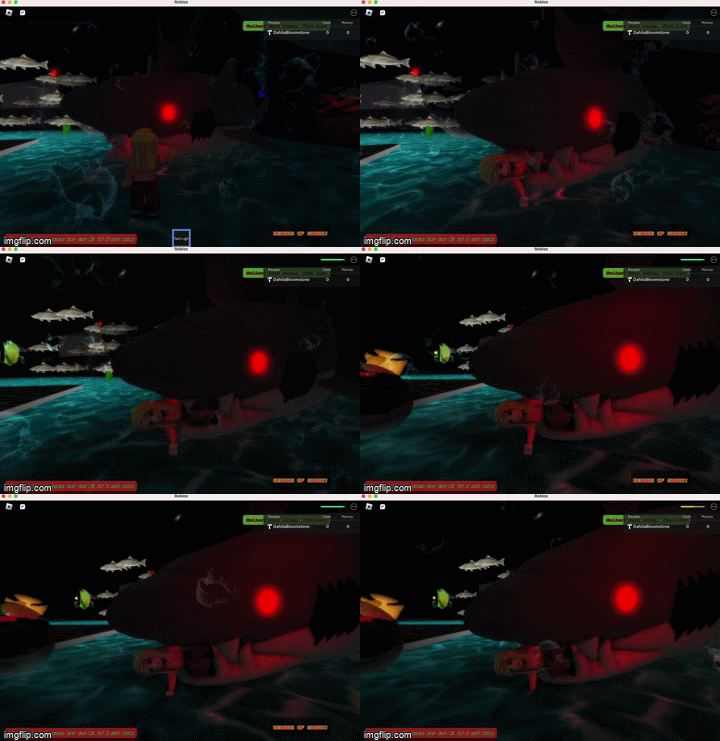
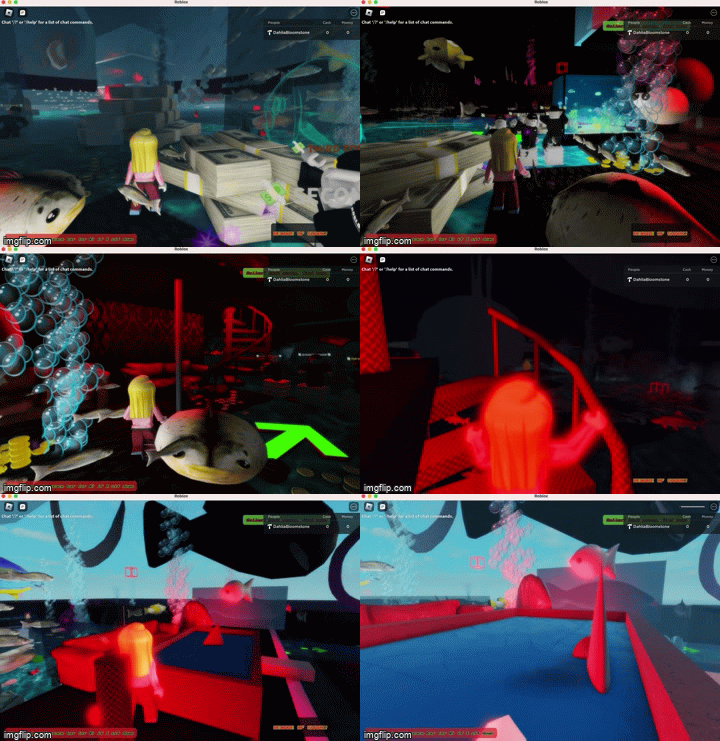
Dahlia has developed a body of work rooted in video and internet research, which has evolved to encompass animation, social practice, virtual worlds, film, and performance. However, her focus for the past three years has been on video games. In her scholarship and interdisciplinary practice, she thinks through social value, respectability, and moral regulation. She considers the politics around certain technologies, which function as stand-ins for deeper cultural and digital inheritances. She is currently most interested in "labor aesthetics" - in conjugating the surrealities of affective work.
Central themes that push her work forward during this time are performing labor through speculative video and ethical sabotage. She is also invested in the fraught space between digital gaming culture and online sexual commodification (and abuse); damask patterns; dumbness and cuteness as inquiries; the corporeal responses elicited by digital visuality in video games; gold; the language that emerges from online censorship; unintended game mechanics; using fishes as main characters, metaphors, and as vehicles and activators to embed conversations of intertwined ecologies; and speaking to alternative systems of value and care.
She uses donation as a somewhat comical moral intervention to subvert “amoral," stigmatized, or otherwise disrespected forms of affective or service work. This method provides another avenue to address the moralizing that happens around affective work and the societal legitimacy of sexual labor as an ontological concern.